

It is 9 p.m., your back is stiff from a day of sitting, and a 45-minute class feels impossible. Good news: yoga for back pain doesn’t need an hour, a studio or any special gear.
Ten gentle poses, held for a minute or two each, fit comfortably into 15 minutes. Done regularly, they can ease stiffness, loosen tight hips and hamstrings and give you a calm end to a busy day.
This guide from intimacyinsight.com lays out the full sequence with Sanskrit names, simple steps and timings. We will also look at what research honestly says and the warning signs that mean you should see a doctor first.
Why 15 Minutes Is Enough to Start
When your back is sore, consistency beats intensity. A short yoga for back pain routine is easy to repeat, and repetition is what slowly loosens stiff muscles.
A Plan You Will Actually Follow
Most people abandon a one-hour plan by the second week. Fifteen minutes fits between dinner and a TV show.
Back Pain Is Very Common
The World Health Organization reports that about 619 million people, roughly one in 13, were living with low back pain in 2020. If your back complains, you are in very large company.
What Research Says About Yoga for Back Pain Relief
What the Evidence Shows
A Cochrane review of trials in people with chronic low back pain found that, compared with no exercise, yoga gave small improvements in pain and back-related function at about three months. The authors described those gains as small and below the level considered clinically important.
Compared with other back-focused exercise, there was probably little or no difference in function. Trials reported no serious side effects linked to yoga, but minor problems, mostly back pain itself, were more common than with no exercise.
What That Means for You
Think of yoga for back pain as a sensible option, not a miracle. The WHO’s 2023 guideline on chronic low back pain recommends exercise programmes, education and some other non-drug approaches, ideally combined.
The best exercise is the one you will repeat. Yoga adds slow breathing and a few minutes of calm, which many routines lack.
Safe Rules for Exercise Yoga for Back Pain
A few ground rules keep a short session helpful instead of harmful.
Stretch to Mild Tension Only
A gentle pull is fine. Sharp, burning or tingling pain means stop. Never bounce or force a pose, and in forward folds hinge from the hips with soft knees.
Use Props and Skip What Hurts
A cushion, folded blanket or belt makes most poses easier. If a pose makes your pain worse, even slightly, leave it out for that day.
The 10 Poses, Step by Step
Follow the order below, because each pose prepares your body for the next. Times include the moment you take to move between poses.
1. Cat-Cow (Marjaryasana-Bitilasana)
Start on your hands and knees, wrists under shoulders and knees under hips. Inhale to lift your chest and tailbone slightly, exhale to round your spine. Do eight to ten slow rounds, about one minute.
It warms up the spine without load, which makes it a smart opener for any yoga for back pain routine.
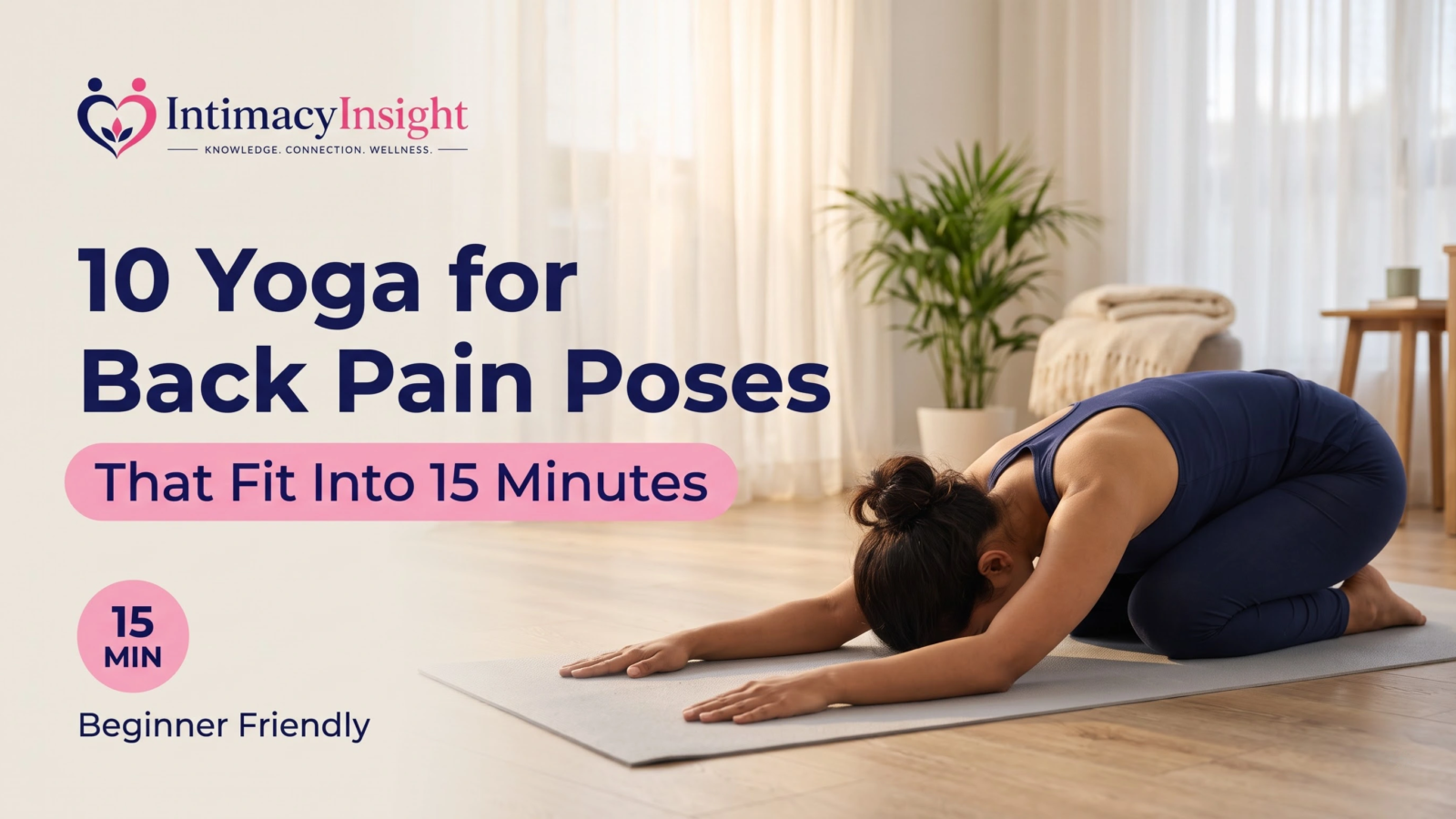
2. Child’s Pose (Balasana)
Sit back on your heels, fold forward and rest your forehead on the floor or a cushion. Let your arms stretch ahead or rest beside you.
Stay for one minute, breathing into your lower back. Tuck a pillow between your hips and heels if that feels easier.
3. Knees-to-Chest Pose (Apanasana)
Lie on your back and draw both knees towards your chest. Rock very gently from side to side if it feels pleasant.
Hold for one minute. It gives the lower back a soft stretch while your head stays down and your neck relaxes, which is why it features in most yoga for back pain classes.
4. Bridge Pose (Setu Bandhasana)
Lie on your back with knees bent and feet hip-width apart. Press into your feet and lift your hips to a comfortable height, squeezing your glutes.
Hold for five breaths and repeat three times, about 90 seconds. Teachers often include it in yoga for back pain sequences, since strong glutes share the load that your lower back often carries alone.
5. Sphinx Pose (Salamba Bhujangasana)
Lie on your stomach with forearms on the floor and elbows under your shoulders. Lift your chest gently and let your legs stay relaxed.
Stay for one minute. It is a mild backbend, so stop if you feel any pinching in the lower back.
6. Half Locust Pose (Ardha Shalabhasana)
Lie on your stomach with your arms by your sides. Lift one leg a few centimetres, hold for three breaths, then switch. Repeat twice on each side, about one minute in all.
It works the muscles along your spine. The half version is a common choice in yoga for back pain classes because it is gentler than lifting both legs. Keep the lift small, because height is not the goal.
7. Downward-Facing Dog (Adho Mukha Svanasana)
From hands and knees, tuck your toes and lift your hips up and back. Keep your knees soft and your spine long. Hold for five slow breaths, about one minute.
It lengthens the hamstrings and calves that tug on your pelvis. Skip it if your wrists or shoulders object.
8. Reclined Hamstring Stretch (Supta Padangusthasana)
Lie on your back and loop a belt or dupatta around one foot. Straighten that leg towards the ceiling while the other foot rests on the floor.
Hold for one minute on each side, two minutes in all. Tight hamstrings often add to lower back strain, so this stretch belongs in any yoga for back pain routine built for desk workers.
9. Reclined Spinal Twist (Supta Matsyendrasana)
Lie on your back, hug your knees in and let both fall to one side. Keep your shoulders on the floor and your arms wide.
Stay for one minute on each side. Make it a gentle release, not a wring, and skip it if twisting aggravates your pain.
10. Eye-of-the-Needle Pose (Sucirandhrasana)
Lie on your back with knees bent. Cross your right ankle over your left thigh, then draw the left thigh towards you. Hold for one minute, then switch sides.
This reclined figure-four stretches the hips and glutes, which tend to be tight in people who sit all day.
Finish With a Closing Rest
Lie flat for the last minute and a half, legs long or knees bent over a cushion. Breathe slowly and let your back sink into the floor. It is not a pose, but it is the part that tells your nervous system to unwind.
Your 15-Minute Routine at a Glance
Screenshot this yoga for back pain table or print it, and tick off each pose as you go.
| # | Pose | Time | Where you will feel it |
| 1 | Cat-Cow | 1 minute | Spine |
| 2 | Child’s Pose | 1 minute | Lower back, hips |
| 3 | Knees-to-Chest | 1 minute | Lower back |
| 4 | Bridge Pose | 1.5 minutes | Glutes, back of thighs |
| 5 | Sphinx Pose | 1 minute | Chest, spine |
| 6 | Half Locust | 1 minute | Back muscles |
| 7 | Downward-Facing Dog | 1 minute | Hamstrings, calves |
| 8 | Reclined Hamstring Stretch | 2 minutes | Back of thighs |
| 9 | Reclined Spinal Twist | 2 minutes | Back, hips |
| 10 | Eye-of-the-Needle | 2 minutes | Hips, glutes |
| Closing rest | 1.5 minutes | Whole body |
Yoga for Back Pain Lower Spine: How to Adjust the Routine
Pain changes from day to day, so treat this routine as flexible rather than fixed.
Short on Time? Try the 5-Minute Version
Do poses 1, 2, 3 and 9, and finish with a short rest. It is not the full routine, but it is far better than skipping the day.
On a Sore Day
Hold each pose for half the time and leave out the backbends and Downward-Facing Dog. Stay with the gentle floor poses and use props generously. A kinder yoga for back pain session still counts.
Which Asana Is Good for Chronic Low Back Pain?
Floor-based poses such as Child’s Pose, Knees-to-Chest, Bridge and the reclined hamstring stretch tend to be the easiest to tolerate. If your pain has lasted for months, ask a doctor or physiotherapist which poses suit you.
Common Mistakes and When to See a Doctor
Mistakes That Slow You Down
Rushing through yoga for back pain poses, pushing into pain and skipping the closing rest are the big three. Expecting overnight results is the fourth. Gains come slowly.
Warning Signs You Should Not Ignore
See a doctor promptly if back pain comes with numbness or weakness in a leg, loss of bladder or bowel control, fever, unexplained weight loss, pain after a fall or injury, or pain that keeps worsening or wakes you at night.
Yoga for back pain should never replace medical attention when these signs appear. This article is general information, not medical advice. Check with your doctor first if you are pregnant or have a spinal condition.
Conclusion: Give Your Back 15 Minutes Tonight
Fifteen minutes is a small ask for a back that carries you all day. These yoga for back pain poses are gentle, simple and easy to repeat, which is why they beat a perfect plan you never start.
Tonight, begin with the first four poses and add one more each evening. Think of yoga for back pain relief as a slow build, not a quick fix, and notice how your body feels after two or three weeks. Small, repeatable steps matter more than a perfect routine. If pain is severe, spreads down a leg or doesn’t settle, speak to a doctor. For more practical wellness guides, keep visiting intimacyinsight.com.
FAQs
1. What is the best yoga for back pain in 15 minutes?
A gentle sequence of floor-based poses, such as Cat-Cow, Child’s Pose, Knees-to-Chest and a reclined twist, works well. The routine above covers all of them in 15 minutes.
2. Is 15 minutes of yoga for back pain enough?
For most beginners, yes. A short routine repeated four or five days a week is more useful than one long session. You can lengthen it later.
3. Which yoga poses are best for lower back pain relief?
Child’s Pose, Knees-to-Chest, a small Bridge and the reclined hamstring stretch are gentle, low-load choices. They are easy to adjust and easy to stop.
4. Can beginners do these yoga for back pain poses?
Yes, all ten are beginner friendly. Use cushions or a belt, go slowly and skip any pose that doesn’t feel right.
5. How often should I do exercise yoga for back pain?
Four to five days a week works for most people. Even ten minutes on a busy day keeps the habit alive.
6. What is the best time of day for yoga for back pain?
Whenever you will do it consistently. Evening suits people with desk jobs because it unwinds a day of sitting, while a short morning session can ease early stiffness.
7. Should I do yoga when my back is flaring up?
During a sharp flare-up, rest and check with a doctor first. Once the worst settles, start with the gentlest poses and short holds.
8. Which poses should I avoid with back pain?
Be careful with deep forward folds, strong twists and big backbends if they make your pain worse. Stop at once if you feel sharp or radiating pain.
9. Can yoga for back pain replace physiotherapy?
No. Yoga can support recovery, but a physiotherapist can assess the cause of your pain and give targeted exercises. Many people benefit from both.
10. How long before yoga for back pain helps?
Some people feel looser after one session. Research looked at changes around three months, so give regular practice a few weeks before judging.