

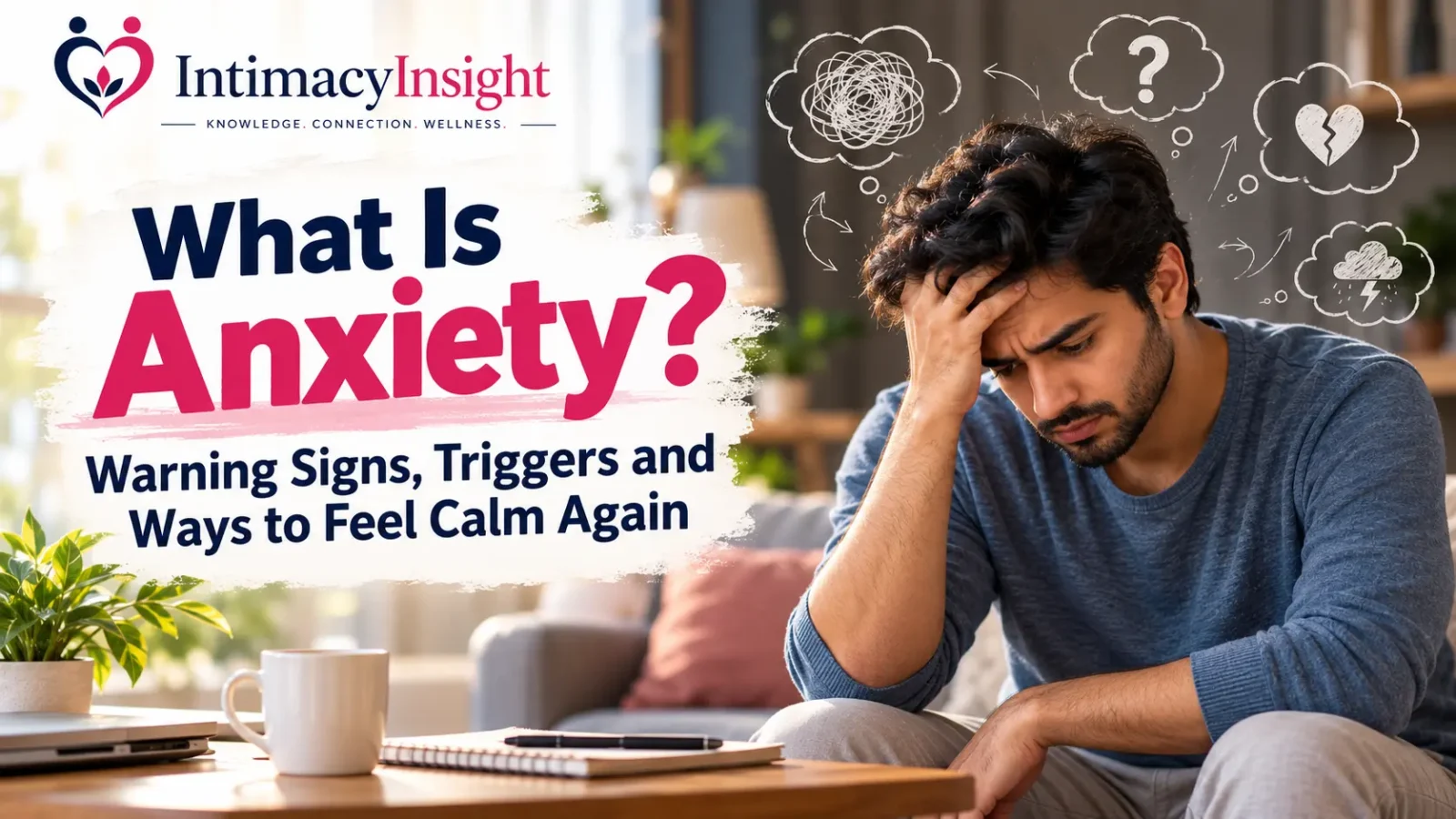

Picture this: it’s 2 a.m., your body is exhausted, yet your mind keeps replaying one awkward sentence from work. That restless feeling is anxiety, and millions of people know it well.
A little worry is normal. It becomes a problem when it follows you into every meal, meeting and night’s sleep.
This guide from intimacyinsight.com explains what is happening inside your body, which signs deserve attention and what you can try today. We will also look at when it is time to talk to a professional. Nothing here replaces medical advice, but it can make a confusing subject feel far more manageable.
Why Your Brain Keeps Sounding the Alarm
Deep in your brain sits a small region called the amygdala, which works like a smoke detector. The moment it senses danger, it sets off adrenaline and cortisol. Your heart speeds up, your breathing turns shallow and your muscles brace for action.
That reaction saved our ancestors from predators. It is far less helpful when the “threat” is an unread email or a family function next week.
Normal Nerves or Something More?
Feeling jittery before an interview is healthy. It pushes you to prepare. The line gets crossed when the fear is bigger than the situation, hangs around for weeks and starts shrinking your life, so you skip calls, dodge travel or cancel plans.
A rough test: who is in charge of your day, you or the worry?
Stress and Worry Are Not Twins
Stress usually has a clear cause, such as a deadline, and eases once it passes. Worry can stay even when everything looks fine, often with a vague sense of dread.
The two overlap, so many people live with the second one for years believing it is just stress.
How Common Is It?
Very. The World Health Organization estimated that about 301 million people had an anxiety disorder in 2019, making it the most common group of mental health conditions. You can read the details in the WHO fact sheet.
If you are struggling, you are far from alone.
Anxiety Symptoms That Are Easy to Brush Off
Signs differ from person to person. Some people feel it mostly in the body, others mostly in the mind, and many get a mix.
What the Body Tells You
A pounding heart, sweaty palms, trembling, a tight chest, stomach upset, headaches, muscle tension and trouble falling asleep are all common. Some people feel dizzy or oddly tired for no reason.
If you keep visiting doctors for these and the tests come back normal, worry may be the missing piece.
What Happens in Your Thoughts
Constant what-ifs. Trouble focusing. A sense that something bad is about to happen, even when you cannot name it. Irritability. Racing thoughts at bedtime, when your body is begging for rest but your head refuses to switch off.
Quiet Signs Hiding in Plain Sight
Not every sign looks like fear. Sometimes it looks like procrastination, perfectionism, snapping at loved ones, asking for constant reassurance or avoiding certain places and people.
Because these habits seem harmless, they pile up quietly. Many people only notice the pattern after months.
Anxiety Attack or Panic Attack: What Is the Difference?
Doctors usually say panic attack, while everyday speech prefers anxiety attack. Both describe a sudden surge of intense fear with strong physical reactions.
Some experts say the first builds slowly out of worry, whereas a panic attack can strike from nowhere. In real life the two feel very similar, so don’t get stuck on the label.
What It Feels Like
Racing heart, chest tightness, breathlessness, sweating, shaking, tingling fingers, nausea and a frightening feeling of losing control. It feels dangerous. It isn’t, although it is awful while it lasts.
One firm warning: chest pain for the first time, or pain spreading to the arm or jaw, needs emergency care. Never assume it is panic.
How Long Does It Last?
Most episodes peak within about ten minutes and then fade. You may feel shaky or drained for an hour afterwards, and that is normal.
What to Do in the Moment
Try these steps in order:
- Name it: “This is a panic attack. It will pass.”
- Breathe in through your nose for four counts and out through your mouth for six.
- Ground yourself with 5-4-3-2-1: five things you see, four you can touch, three you hear, two you smell, one you taste.
- Sit down, loosen tight clothing and sip some water.
- Stay put until the wave settles, if it is safe to do so.
Understanding Anxiety Disorder and Its Common Types
Only a trained professional can diagnose an anxiety disorder, but knowing the main types helps you describe your experience clearly.
Generalized Anxiety Disorder (GAD)
Hard-to-control worry about everyday things like money, health or family, on most days for six months or more.
Social Anxiety
An intense fear of being judged or embarrassed. Parties, presentations and even phone calls can feel unbearable.
Panic Disorder
Repeated, unexpected panic attacks plus a constant fear of the next one. Some people start avoiding places where an episode once happened.
Phobias and Health Worries
Specific phobias, such as fear of heights or flying, belong here too. So does a strong fear of serious illness despite normal test results.
What Triggers It? Causes Worth Knowing
There is rarely one cause. Usually it is a blend.
Genes and Brain Chemistry
If a parent or sibling has struggled with it, your chances are higher, though far from certain. Brain chemicals such as serotonin also play a part.
Life Events and Experiences
Work pressure, money trouble, breakups, grief, trauma and big transitions can all light the fuse. A rough childhood may leave the nervous system on high alert for years.
Everyday Habits
Too much caffeine, little sleep, skipped meals, alcohol and endless doomscrolling can turn the volume up. Some medical issues, such as thyroid problems, mimic these feelings, so a basic health check is sensible.
How to Deal With Anxiety: Daily Habits That Actually Help
There is no magic fix. But small habits, repeated, change how your nervous system behaves. Here is what tends to work.
Slow Your Breathing
It is the fastest tool you own. Breathe in for four counts and out for six, for two to five minutes. The longer exhale tells your body it can stand down.
Move a Little Every Day
A 20 to 30 minute walk lowers tension and lifts mood. No gym needed. A brisk loop around your block counts, and our guide on morning walking benefits shows how a simple routine can help.
Protect Sleep, Trim Caffeine
Honestly, this is the habit people skip, because it is boring. Keep a regular bedtime, put screens away 30 minutes before sleep and avoid tea or coffee after lunch. Poor sleep and jittery nerves feed each other.
Put Worries on Paper
Spend ten minutes writing every worry down, then circle only the ones you can act on. A fixed “worry time” each evening also stops thoughts from leaking into the whole day.
Rein In the News and Social Feeds
Doomscrolling is fuel. Try checking headlines once or twice a day and see how your mind feels after a week.
Talk to Someone
Saying it aloud to a friend or family member shrinks it. You don’t need a solution from them, just a listening ear.
Anxiety Treatment: When Self-Help Is Not Enough
Self-help is a fine start, but see a doctor if the worry lasts more than a few weeks, disrupts daily life or comes with repeated panic attacks. Good anxiety treatment exists, and most people improve with the right support.
Therapy
Cognitive behavioural therapy (CBT) helps you spot unhelpful thought patterns and face fears step by step. It is one of the most studied approaches.
Medication
Doctors sometimes prescribe medicines such as SSRIs. They should be started, changed or stopped only under a psychiatrist’s guidance, never on your own.
Who to Approach
A psychiatrist is a medical doctor who can diagnose and prescribe. A clinical psychologist or trained counsellor provides therapy. In India, the government’s Tele-MANAS helpline (14416) offers free, round-the-clock support. The NIMH page on anxiety disorders is another reliable reference.
If you ever have thoughts of harming yourself, contact emergency services or a helpline right away.
Conclusion: Small Steps, Real Relief
Anxiety is a human response that turns heavy when it goes unaddressed. Learning to spot early anxiety symptoms, knowing what an attack feels like and practising slow breathing already put you ahead of where you were yesterday.
Start small. Try one breathing round tonight, walk for twenty minutes tomorrow and message someone you trust. Write down what you notice for a week, because patterns become easier to treat once you can see them. If worry keeps winning, book an appointment and explore proper anxiety treatment. Asking for help takes courage, not weakness.
You have already taken a step by reading this far. Keep exploring practical, easy-to-follow wellness guides at intimacyinsight.com.
FAQs
1. What is anxiety and why does it happen?
It is the body’s natural reaction to perceived danger. It turns into a problem when it is constant or out of proportion. Genes, stress, past experiences and daily habits all play a part.
2. What are the early anxiety symptoms?
Persistent worry, restlessness, poor sleep, irritability, a racing heart and avoiding things you used to handle are common early signs.
3. How to deal with anxiety at night?
Keep a fixed bedtime, switch screens off early, write your worries down before bed and practise slow breathing. Avoid caffeine after lunch.
4. Is an anxiety attack the same as a panic attack?
Medically, panic attack is the standard term. People use the other phrase for a similar surge of fear, often one that builds up from worry.
5. How long does an anxiety attack last?
Most peak in about ten minutes and ease soon after, though you may feel tired for an hour or so.
6. Which anxiety treatment works best?
It depends on the person. CBT, sometimes alongside medication and lifestyle changes, helps many people. A professional can suggest the right mix.
7. Can an anxiety disorder be cured?
Many people recover or learn to manage it so well that it stops running their life. Ongoing support and healthy habits help prevent it from returning.
8. How can I calm my mind naturally?
Regular walks, good sleep, less caffeine, slow breathing and honest conversations are good starting points. They support professional care but do not replace it.
9. Can worry cause chest pain and other physical problems?
Yes. Tightness, stomach upset, headaches and dizziness are common. But new or severe chest pain must always be checked by a doctor.
10. When should I see a doctor?
When worry lasts more than a few weeks, affects work, sleep or relationships, or brings panic attacks. Seek help immediately if you have thoughts of self-harm.