


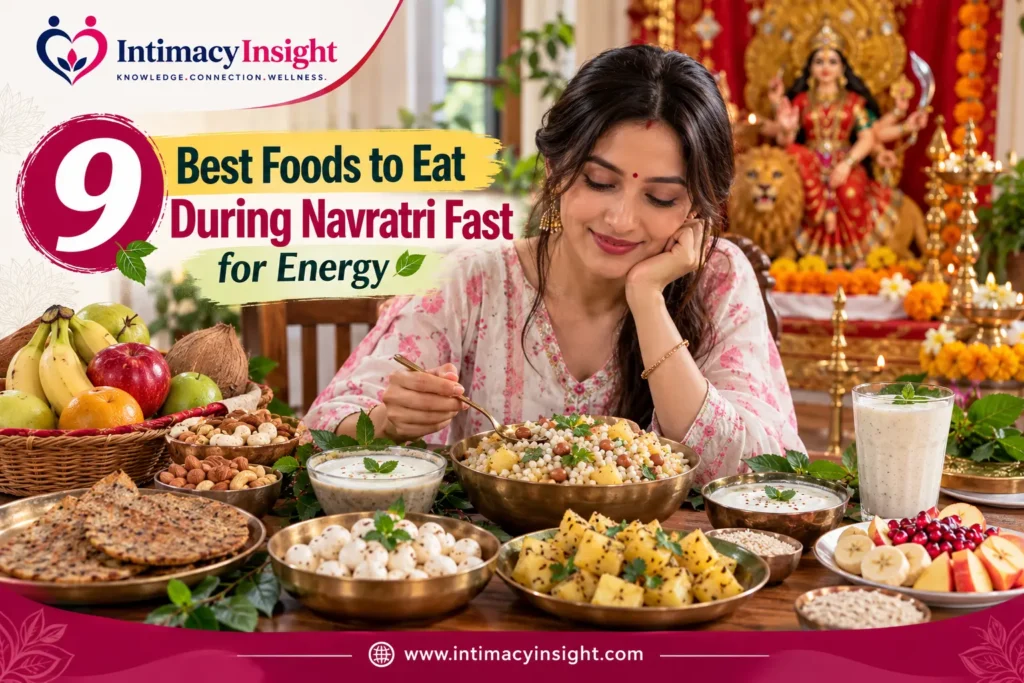
Every year, millions of people all over India celebrate Navratri fast, but they find it hard to stay energized throughout the nine days. In Navratri fasting, one is supposed to do more than avoid regular eating; one has to eat the right food to remain energized as you continue being committed to your beliefs. This is the ideology at Intimacy Insight; one can be healthy and celebrate at the same time.
Here is a guide that will help you understand the best nine foods that will give you energy during the period of vrat, together with the rules of fasting and things to avoid.
What Is Navratri Fast and Importance of Energy During Navratri Fast
Navratri fast is a nine-day fasting period when people abstain from grains, some spices, and non-vegetarian food to offer their devotion to Goddess Durga through fasting and faith. In addition, for many people, Navratri fasts mean adopting a healthier diet and cleansing their bodies. However, failing to plan your fasting period properly, you risk feeling extremely exhausted in the middle of the second or third day.
Falling energy levels while fasting typically occur due to the sudden reduction of carbohydrate and calorie intake that is not common to your body, causing fluctuations in blood sugar and making you tired, headachy, and inattentive. Therefore, picking up the right fast foods turns out to be crucial along with the fast itself.
Navratri Fasting Rules You Need To Follow Before You Start
Before getting into the eating part, here is some background information regarding basic Navratri fasting Rules followed by most Indian families. Wheat, rice, and any other grains are usually not consumed; rather, people resort to other types of flour such as kuttu and singhare ka atta. Instead of regular table salt, which is believed to be impure for fasting, sendha namak or rock salt is used.
Onion and garlic are other food items that are to be avoided during Navratri, as are most non vegetarian foods and alcohol. Ekaana vrat is the term used when one eats only once in a day, while some people opt for fruits and light meals throughout the day. However, there is no hard and fast rule when it comes to fasting guidelines, and different families have their own variations, so do whatever seems convenient to you.
Best 9 Foods That You Should Consume During Navratri Fasting
What you consume during your fast is what will make all the difference between feeling sluggish and feeling energetic. Here is a list of nine foods that should be included in your fasting diet.
1. Sabudana (Sago) – Get Instant Energy
Sabudana is one of the most common fasting foods consumed in India, and there is a reason why. It is high in carbohydrates, which provide instant energy once ingested, thus making sabudana a perfect food for lunch to get an instant burst of energy. Sabudana khichdi with peanuts and mild spices is an all-time favorite dish.
2. Kuttu Atta (Buckwheat Flour) for Long-Lasting Energy
Kuttu atta, otherwise known as buckwheat flour, is used extensively in making puris and parathas during the fasting period. It is a good source of both protein and fiber; hence, energy is released slowly from the body. It is therefore a great choice whenever one requires strength that will last all day long.
3. Singhare ka Atta (Water Chestnut Flour)
Singhare ka atta is yet another essential item during the days of Navratri. Water chestnut flour is naturally gluten-free and is quite easy to digest, hence not very harsh on your stomach during long fasting periods. Rotis or pooris made from water chestnut flour along with curd make a delicious meal.
4. Fruits for Natural Sugars and Water Intake
Fruits such as bananas, apples, and pomegranates have natural sugars, which give you energy boosts in a more subtle way without putting too much strain on your digestive system. These fruits contain lots of water, which helps hydrate you, something that may be ignored when you are fasting.
5. Dry Fruits & Nuts to Maintain Energy Levels for Longer Periods
Even a few pieces of almonds or cashews will keep you going in Navratri fast for quite some time. Dry fruits are high in calories and are rich sources of natural sugar and fats, thereby keeping you energized throughout the day. Having a pack of nuts in your handbag is the simplest way to avoid getting tired suddenly.
6. Dairy Items such as Milk, Curd, and Paneer
Dairy food items serve as an excellent source of protein during the fast, considering that almost all the other sources of protein become unavailable during fasting. Specifically, curd improves the digestive process and also keeps the stomach cool, and paneer serves as a good choice for lunch or dinner.
7. Rajgira (Amaranth) for Protein and Fiber
Rajgira or amaranth can be used to prepare laddus or rotis on the occasion of Navratri. Amaranth is inherently a good source of protein and fiber, ensuring smooth digestion and making one feel less hungry for more time. It is thus ideal for people who are fasting on Navratri.
8. Sendha Namak Based Light Meals
Due to no consumption of ordinary salt, sendha namak is very necessary to give flavor to food items in order to not break any rules of vrat. Food items prepared using sendha namak, like boiled potato and roasted makhana, are light for stomach and keep the electrolyte levels normal.
9. Coconut Water and Herbs Drinks for Proper Hydration
It is as crucial to stay hydrated as it is to have healthy food. Coconut water contains electrolytes and prevents exhaustion caused by dehydration during fasting. Tulsi water and cumin infused water are some other mild herbs drinks which help with digestion.
Navratri Fast Foods Plan for the Entire Day
The planning of meals through a structured pattern will make it much easier for the preparation of navratri fast foods. Starting off the day with a fruit bowl containing some soaked almonds will help in having an easy meal plan for breakfast. In lunch, one can consume sabudana khichdi or kuttu atta paratha with curd.
Makhana can be enjoyed by roasting for night hunger pangs or some dry fruits can do the job. Singhare ka atta roti with potato sabzi can do the trick for your dinner. This sort of a meal plan ensures that you don’t miss meals and long gaps cause weakness.
What Should One Eat During Navratri Fast If Feeling Weak?
If at any point of time, one experiences a feeling of weakness, the best way to tackle it is by consuming a little something rather than having to wait until the next proper meal. The consumption of bananas along with soaked raisins will help increase blood glucose levels. Another good choice would be to have coconut water.
This is because knowing what to eat in Navratri fast in times like these will ensure that the fast does not become exhausting for you.
Foods to Avoid During the Navratri Fast
Though there is an abundance of foods that one can eat during the Navratri fast, there are some that are best left out. Common table salt, whole-wheat flour, rice, and lentils generally do not make the cut when it comes to fasting. Non-vegetarian foods are also abstained from.
Even the fast snacks sold in packets should be treated with caution, as they may have ingredients which do not match the criteria for vrat. It is better to either look at the ingredient list or go for home-made items while choosing foods to avoid in navratri.
Tips for Keeping Yourself Energetic During the Navratri Vrat
There are little things that one can do in order to make a huge difference in the way he feels during the period of nine days. One should try not to miss meals even though his intake might be reduced because missing out on meals results in exhaustion. Drinking plenty of water is very important.
In addition, physical activity like taking a short walk is another way to keep energy levels up as opposed to remaining immobile. Most importantly, tune into your own body and make changes to your fast where needed.
Frequently Asked Questions
What should I eat during Navratri fast for energy?
Sabudana, dry fruits, bananas, and dairy products are some examples of food that you can consume to have sustained energy during your fasting. Such foods are composed of natural sugars, protein, and healthy fats.
Is kuttu atta good for Navratri fast?
Yes, kuttu atta is a popular and healthy choice during fasting since it is rich in protein and fiber. It digests slowly, which helps provide longer lasting energy compared to quick sugar based snacks.
What are the Navratri fasting rules for food?
The fasting rules usually exclude normal wheat flour, salt, onion, and garlic and include different types of flours such as kuttu and singhare flour along with fruits, milk products, and sendha namak meals.
What foods should be avoided during Navratri fast?
Use of wheat flour, rice, lentils, common salt, and non-vegetarian foods is normally not encouraged. It would be prudent to read labels of snacks available in packages, as not all of them adhere to fasting traditions.
Can I eat fruits during Navratri fast?
Yes, fruits are known to be one of the best options during the fasting period of Navratri. Fruits contain natural sugar, moisture content, and vitamins; thus, they form an easily available choice during fasting.
As you fast during your vrat this year, bear in mind that fasting is meant to nourish your body and not exhaust you. With the proper diet and just some simple planning, you can remain energized throughout all the nine days. May you have a happy Navratri.